
ATR / COMMERCIAL ACOUSTICS
Kulini.
Coffee. Re-engineered.
Recovered coffee byproducts, formed into an architectural acoustic surface for commercial interiors.
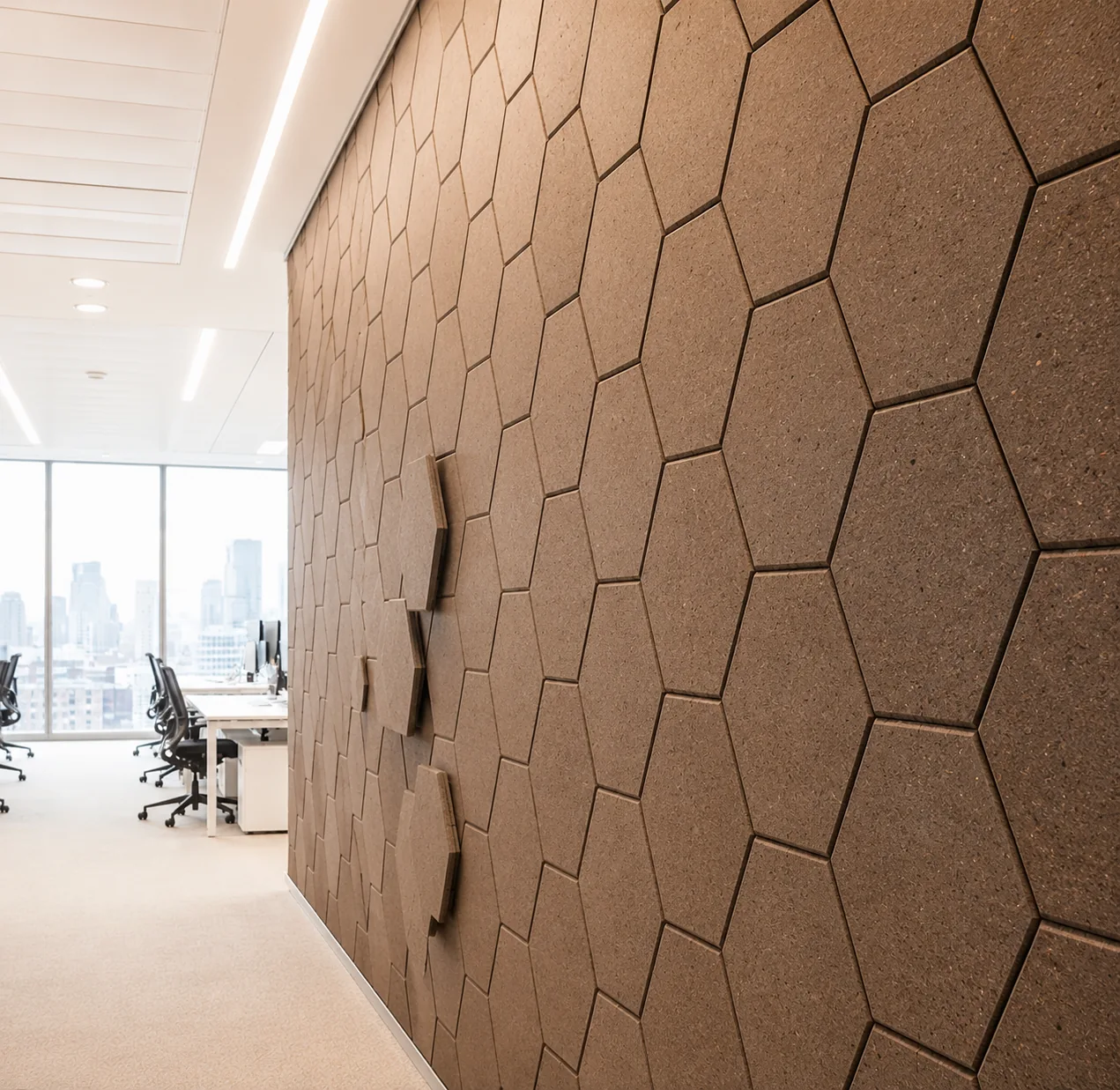
COFFEE-DERIVED ACOUSTIC COMPOSITE
Kulini.
Material depth. Acoustic intent.
Recovered coffee byproducts, formed into an architectural acoustic surface.
Kulini combines recovered coffee byproducts with a mineral–protein binder system, using casein protein and mineral inputs. Its textured, micro-porous surface brings depth to commercial walls, with 20 mm and 40 mm constructions developed around different acoustic design targets.
Explore the material architecture
Kulini is a high-performance commercial interior solution manufactured directly from recycled post-consumer coffee byproduct streams to deliver targeted wave-attenuation profiles across high-occupancy corporate layouts. Moving far beyond unmanaged organic waste use, the system stabilises raw biogenic byproduct mass via mechanical moisture-calibration and precision compounding with a mineral–protein binder system to eliminate toxic synthetic chemical glues.
The processed compound is formed into structurally stable acoustic panels through an automated high-pressure compression-moulding system, producing a dense, rigid composite matrix characterised by an irregular micro-porous surface topology and a tortuous internal cell network.
This engineering-first architecture functions as high velocity boundary asset targeting mid-to-high frequency sound wave attenuation (500Hz - 2000Hz) at 20mm through to an active sub-surface pressure trap, maximising viscous flow resistance to target, damp, and encapsulate lower-mid frequency sound waves (250Hz - 500Hz) at 40mm where heavy vocal fundamentals and mechanical HVAC rumbles pool.
Frequency profiles are design targets described in ATR’s technical data sheet. Confirm the tested performance and mounting arrangement for your project.
ATR / MATERIALS
Resource re-engineering.
Architectural possibility.
Industrial Resource Re-Engineering is ATR’s approach to turning industrial and post-consumer byproducts into material opportunities for commercial interiors.
Explore the materialsHow we re-engineer materials
Coffee-derived inputs, recovered polyester fibre and corrugated paperboard form part of this material direction. Mechanical stabilisation, fibre opening and compression moulding are explored alongside mineral and thermal-fusion bonding, according to the material and application.
Full Lifecycle Asset Recovery informs the design of mechanical mounting, non-destructive disassembly and future recovery. The recovery route and performance requirements are defined for each system and project.
Eelgrass.
A marine bio-fibre derived from naturally detached sea plants collected from shorelines. Its hollow, fibrous structure creates air pockets that can contribute to sound absorption, moisture buffering and a tactile, naturally varied surface.
Explore eelgrass in mats, panels, ceiling forms or acoustic infill layers where acoustic comfort and material character need to work together. The finished product’s durability, fire performance, indoor-air characteristics and environmental impact are assessed for its construction and use.
Explore eelgrass applications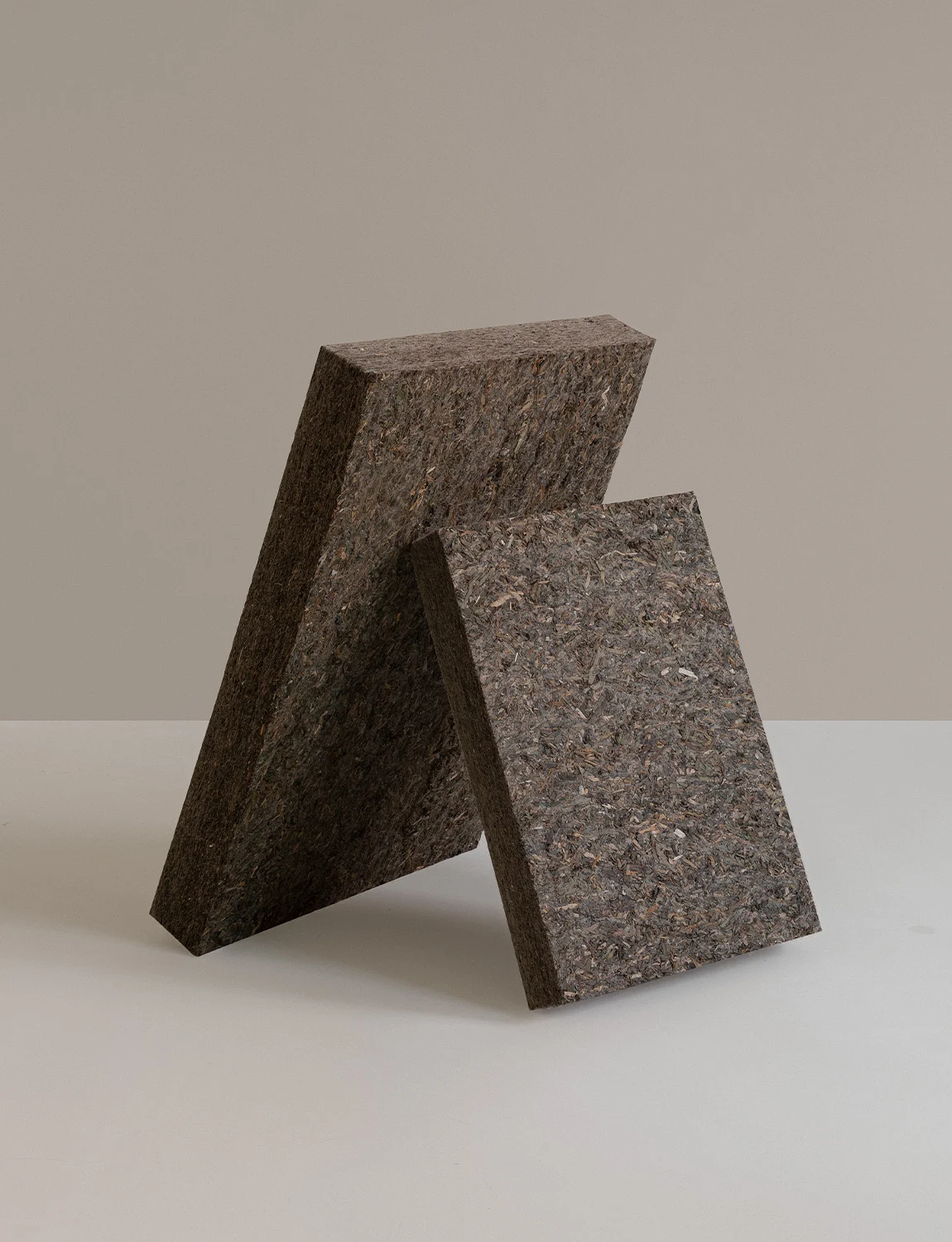
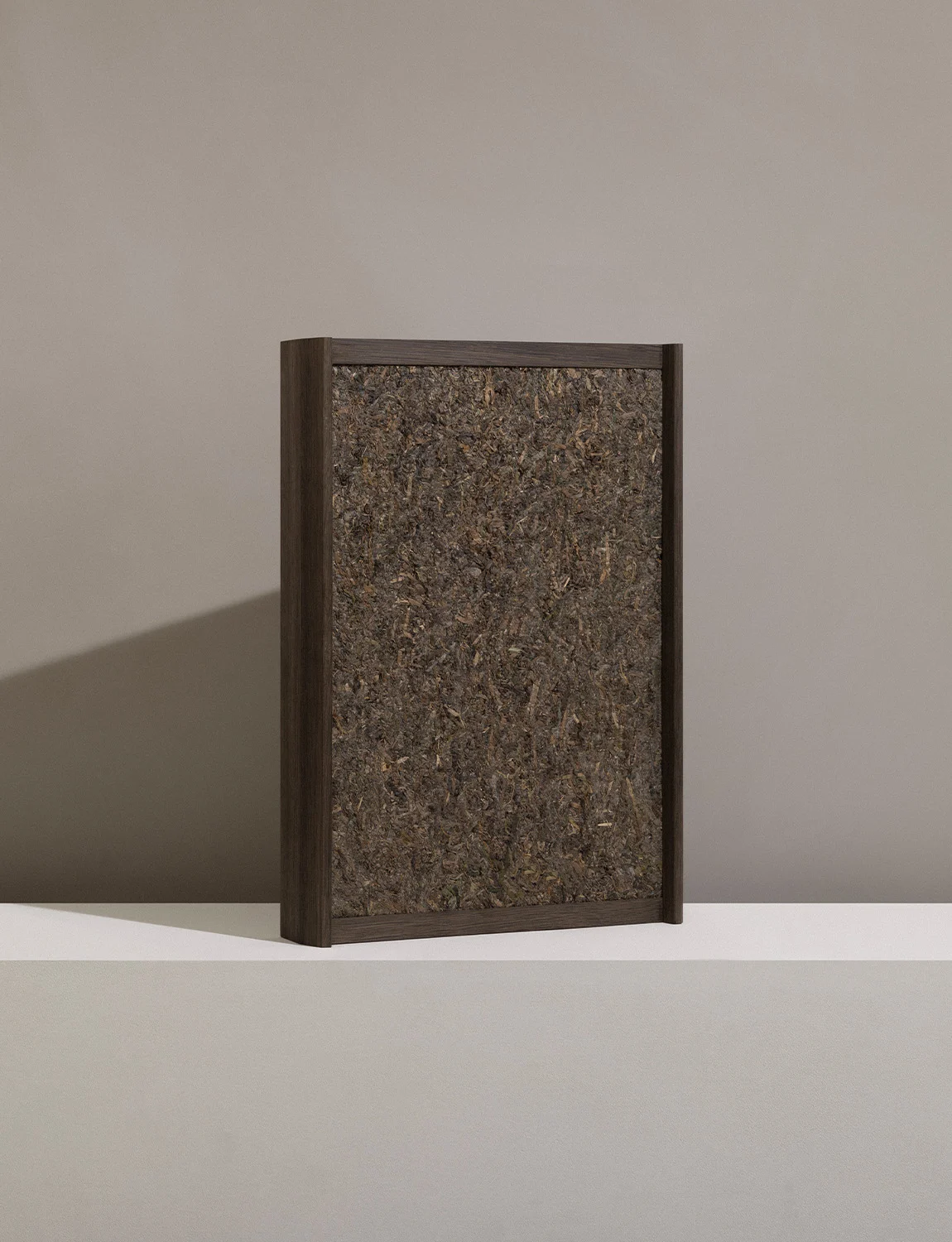
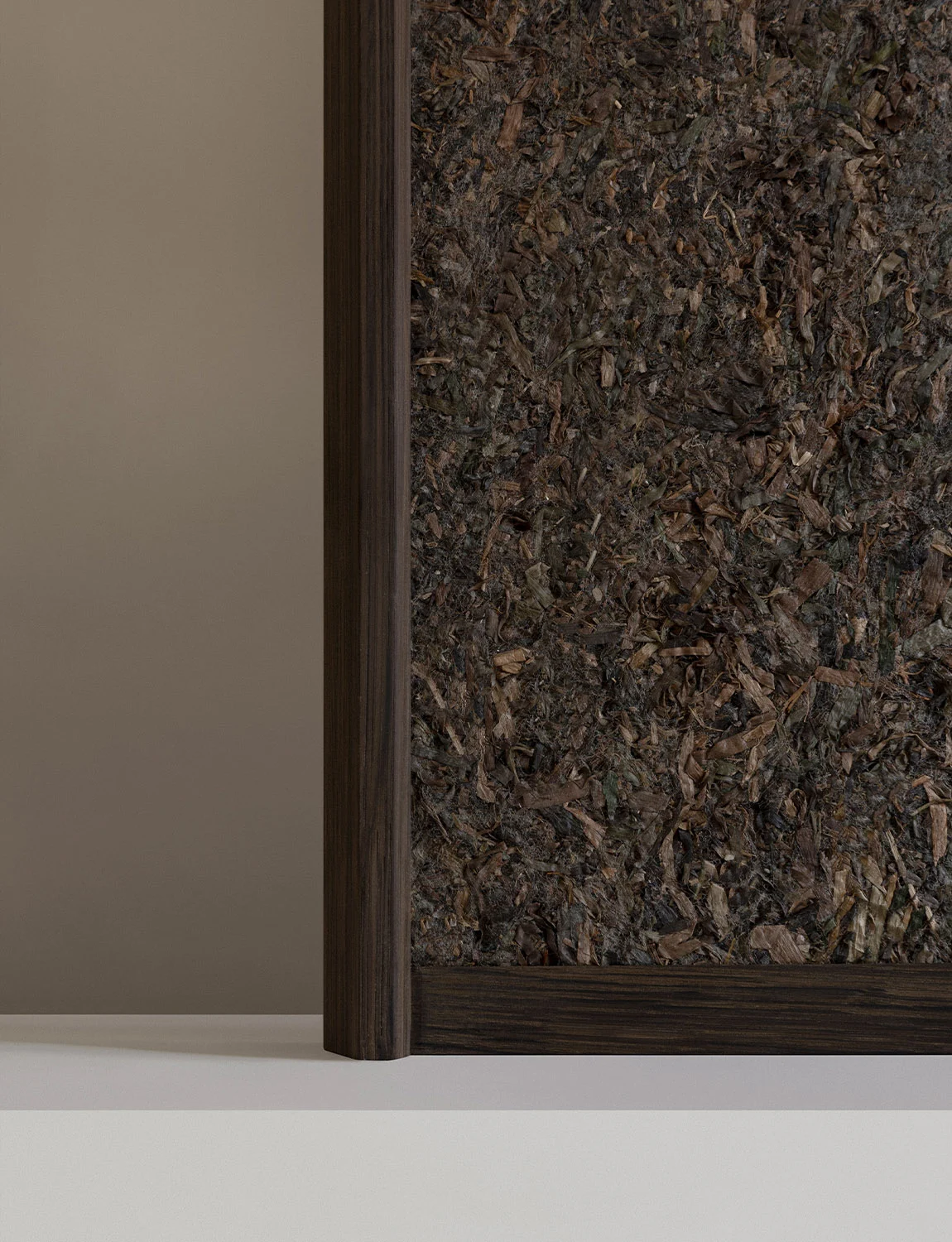
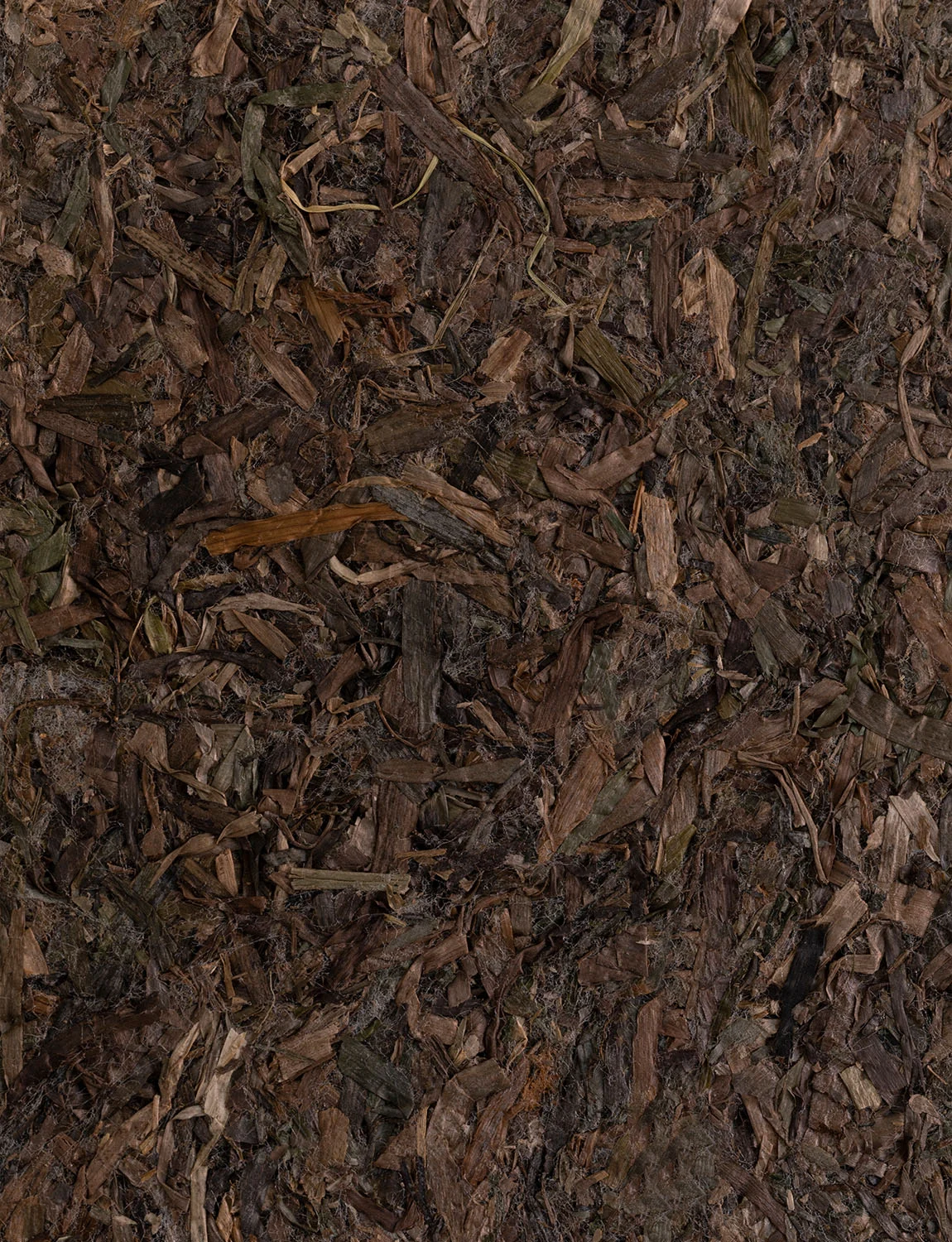
Material references / panel formats, framing and fibre texture.
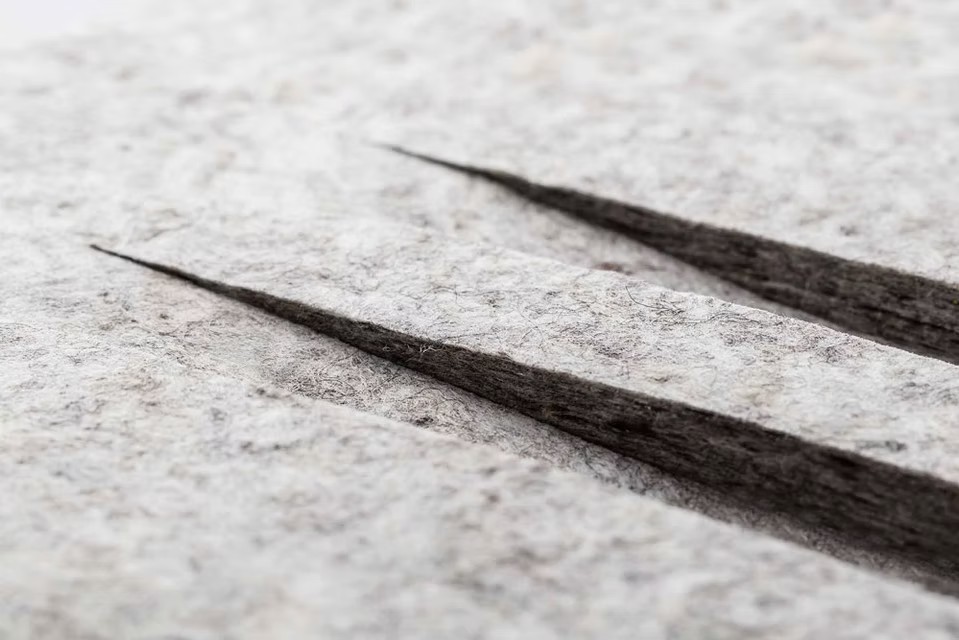
An application-led palette.
EcoXan
A lightweight structural bio-composite made from recovered cell fibre and upcycled corrugated paperboard grids. A fluted internal core sits between dense outer liners, creating a three-layer board designed to balance rigidity with low weight.
Developed for decorative surfaces, ceiling forms and selected acoustic structures, EcoXan supports an engineering approach that considers component connections, disassembly and material recovery alongside the finished appearance. Span, loading, fire treatment and mounting are specified for the intended application.
Discuss EcoXan for your projectPolyCore
Recovered polyester fabric becomes an acoustic core for commercial interiors. Mechanical sorting, fibre opening and heat-press thermal bonding consolidate post-industrial and post-consumer textile inputs into a stable, interconnected fibre structure.
The porous core is designed to absorb sound as air moves through the fibre network, dissipating acoustic energy through friction. Density, thickness, placement and the surrounding construction are developed around speech-related acoustic needs, with removal and future recovery considered in the assembly.
Discuss PolyCore for your projectPET
An established commercial material route within ATR’s portfolio, where acoustic predictability and familiar certification pathways are priorities. Specification depends on the exact product, treatment and supporting test evidence.
Discuss PET specification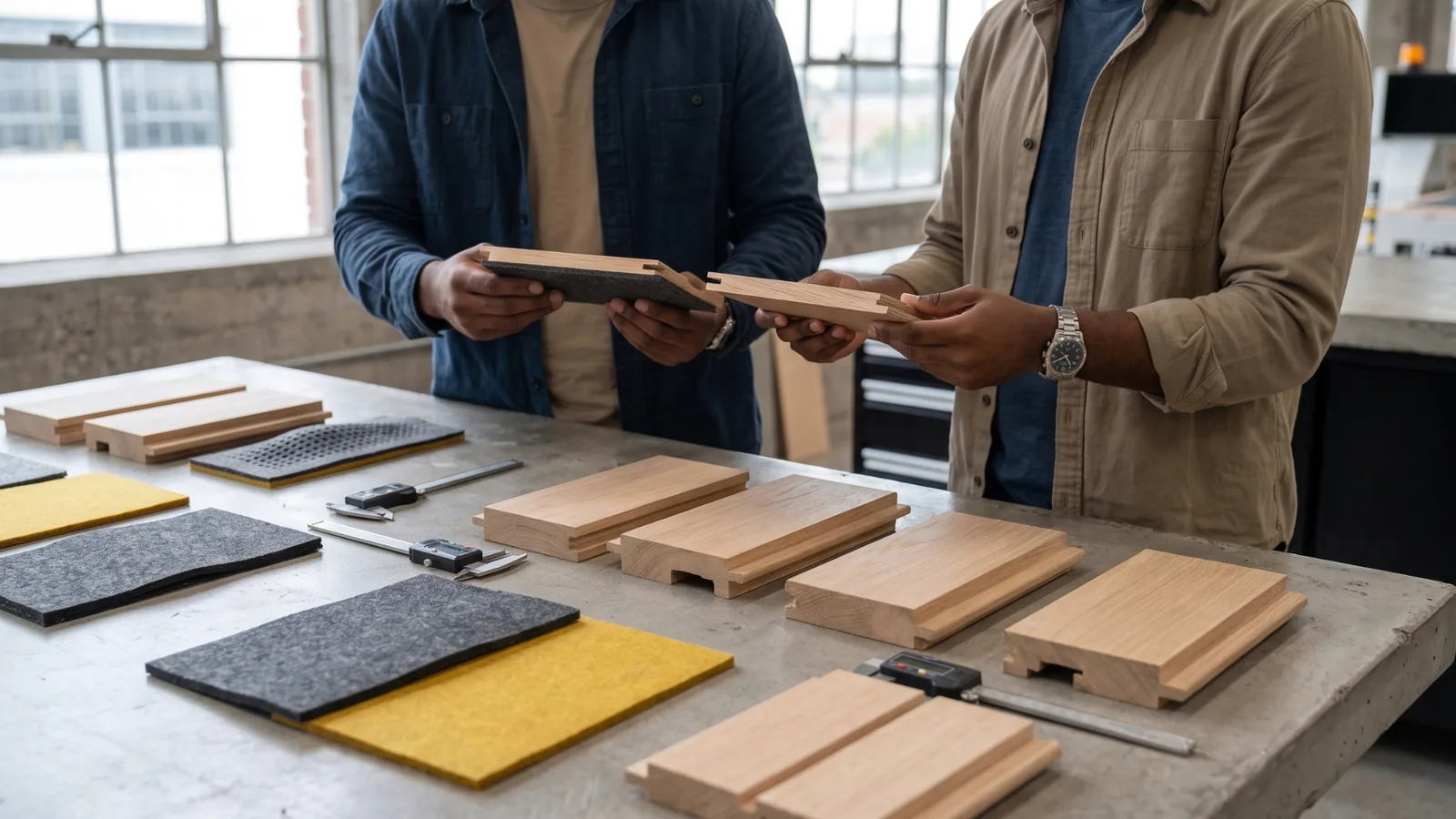
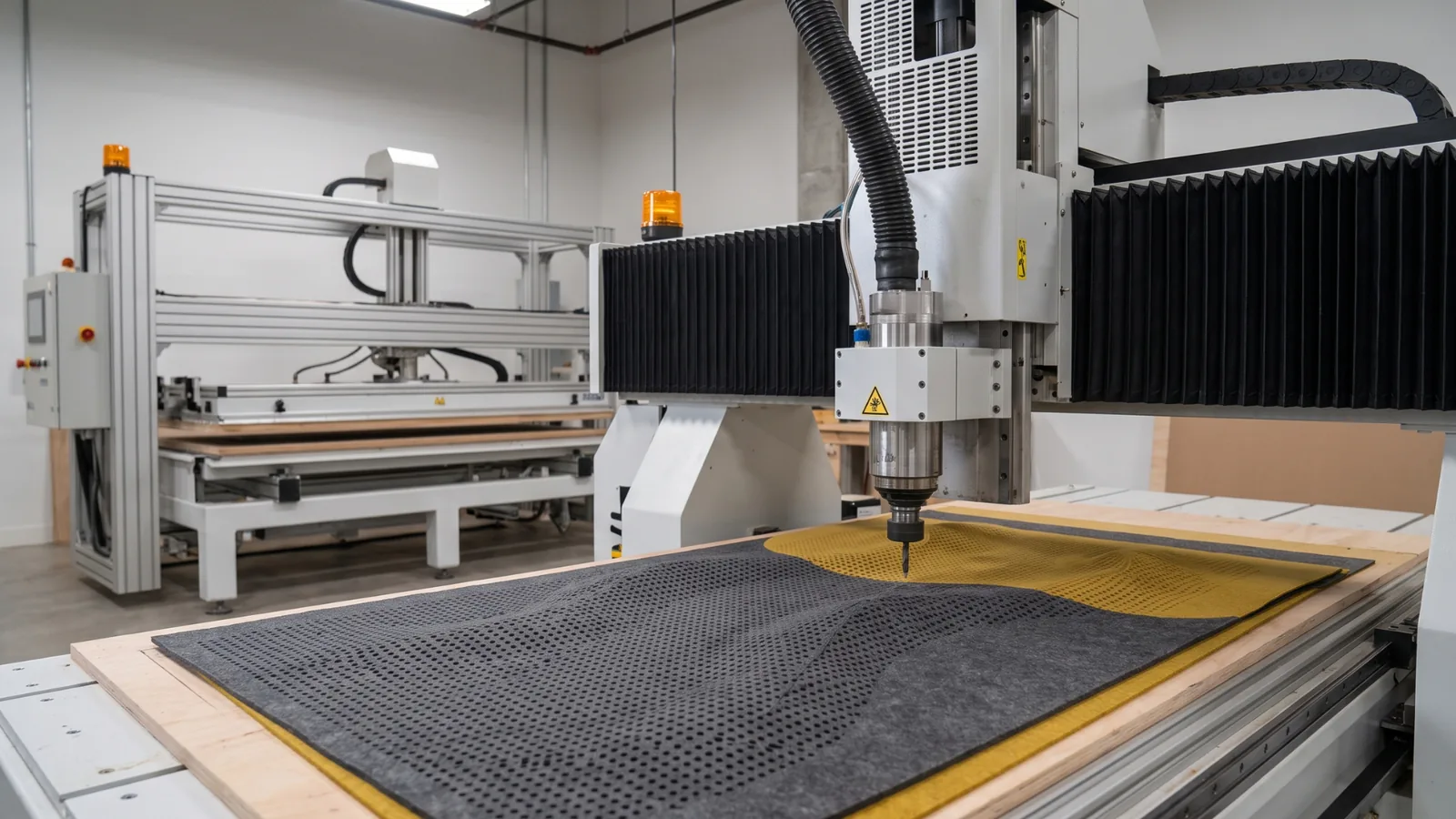
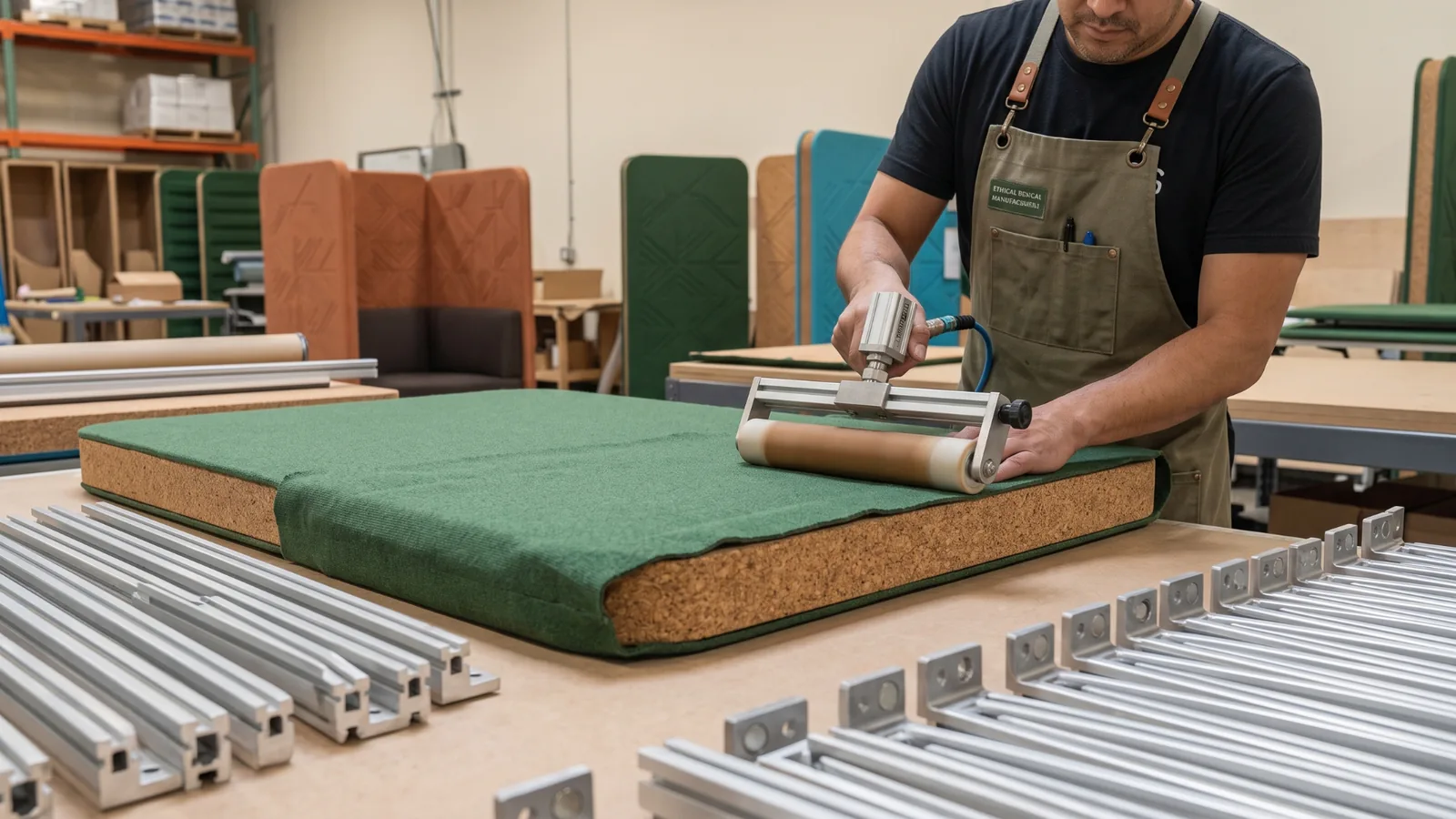
Material-development visualisations.
Confidence in the material.
Look beyond the source alone. Sound absorption, fire performance, emissions to indoor air, durability, cleaning, installation and future recovery all matter. We can help identify the evidence available for your chosen product and what needs to be confirmed for the project.
A Versatile
Material Library.
Start with the material.
Deliver unprecedented performance.
Materials selected for the sound, finish and everyday demands of your space—with performance evidence and future reuse considered from the start.
Tell us what your product needs to do, how it should look and where it will be used. We’ll develop the material direction around your brief.